Four hundred twelve new packages were submitted to CRAN in June. Here are my Top 40 picks in nineteen categories: Bioarchaeology, Biology, Climate Studies, Computational Methods, Ecology, Epidemiology, Finance, Functional Data Analysis, Machine Learning, Medical Statistics, Networks, Pharmacokinetics, Probability, Programming, Psychometrics, Risk Analysis, Statistics, Time Series, and Utilities.
Bioarchaeology
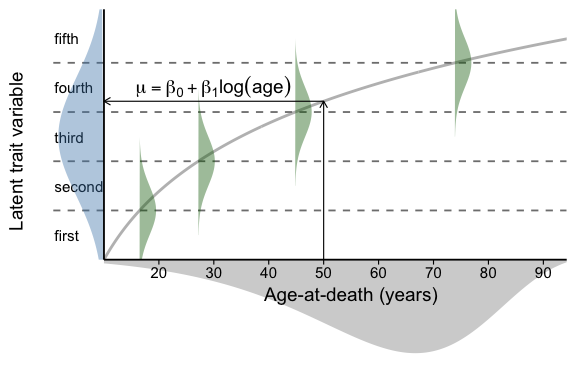
baytaAAR v1.0.3: Provides Bayesian age estimation for bioarchaeological skeletal data using ordinal probit regression models implemented in JAGS and NIMBLE. The package is designed to handle multiple ordinal traits of adult individuals and incorporates a Gompertz prior on age to reflect population-level mortality. It accounts for estimation uncertainties and supports full customization of model parameters and Markov Chain Monte Carlo settings. For more details, see Müller-Scheeßel et al. (2026). There are five vignettes including Introduction and Mathematical background.
Biology
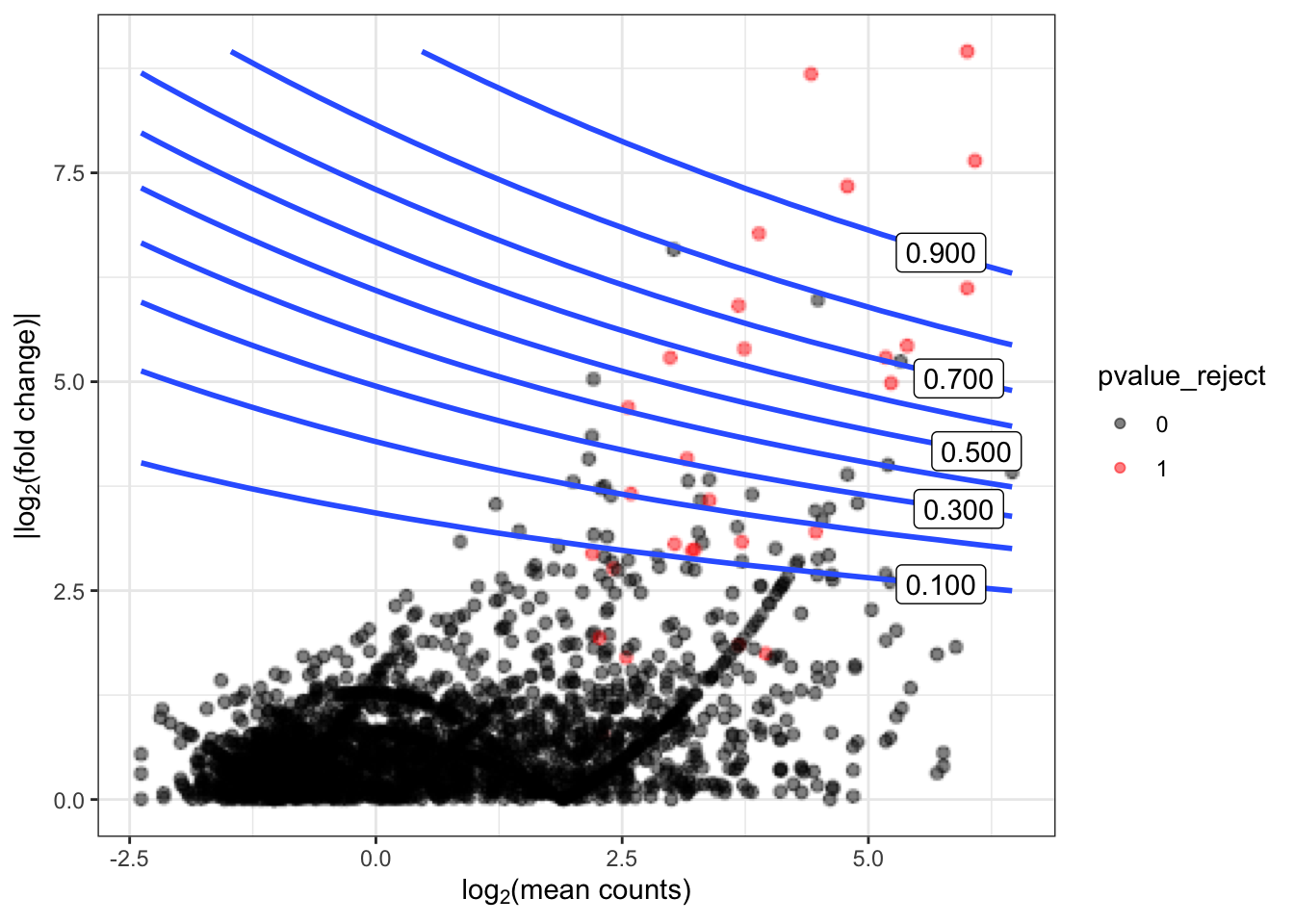
power.nb v0.1.0: Provides functions for estimating statistical power and required sample sizes in differential abundance microbiome studies using negative binomial models and includes tools for simulation-based power analysis and sample size estimation using generalized additive models (GAMs), and visualization utilities for exploring the relationship between power, effect size, abundance, and sample size. The methods are based on Agronah and Bolker (2025). See the vignette.
Climate Studies
clim4health v0.1.0: Provides functions to obtain, transform and export climate data, including reanalyses, seasonal forecasts and hindcasts, and weather stations for their use in epidemiological analyses. Features include downscaling, verification, spatiotemporal aggregation and threshold-based indicators. See Duzenli et al. (2026) for downscaling methods and Manubens et al. (2018) for verification methods. There are six vignettes, including Introduction and Overview.
Computational Methods
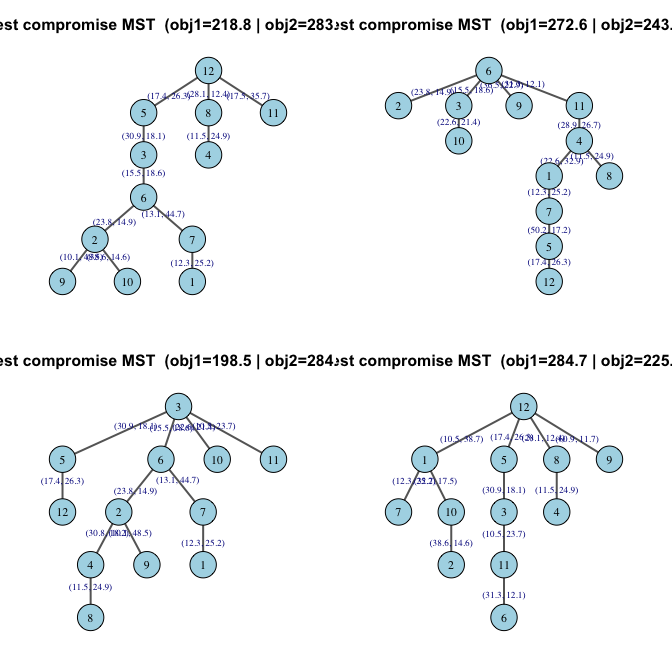
momst v0.1.1: Provides functions to solve the Multi-Criteria Minimum Spanning Tree problem on complete weighted graphs by combining the Non-dominated Sorting Genetic Algorithm II with optional Pareto local search operators. Chromosomes are represented as Prufer sequences so that every random individual decodes to a valid spanning tree (Cayley’s theorem), avoiding repair operators. Four solver variants are provided: NSGA-II, Path Relinking, Pareto Local Search, and Tabu Search. See Parraga-Alava et al. (2017) for background. There are two vignettes: Getting Started and Comparing the Four MO-MST Variants.
nmathopencl v0.8.3: Ships statistical and mathematical routines from the R internal nmath (Mathlib) as OpenCL C sources under directory inst/cl/, with R wrappers. Uses the GPU when OpenCL is available at compile time and falls back to stats equivalents otherwise. Aimed at package developers building custom kernels (for example Bayesian GLMs via suggested package glmbayes) using opencltools kernel loaders and related helpers. There are thirteen vignettes, including Package Overview and Case study.
sparsediff v0.4.0: Implements bindings for the SparseDiffEngine C library, the sparse Jacobian and Hessian differentiation backend used by CVXPY for its Disciplined Nonlinear Programming extension. Provides low-level routines for building nonlinear expression graphs and evaluating sparse derivatives, intended as a backend for higher-level modeling layers such as CVXR. This is the R analog of the sparsediffpy Python package and wraps the same C library. See the vignette.
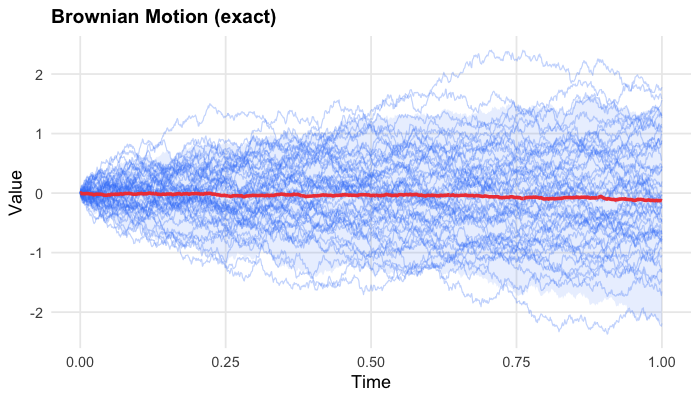
StochSimR v1.1.0: Implements a modular simulation engine for a wide range of stochastic processes. Provides exact and approximate simulation methods for Poisson processes, Brownian motion, discrete- and continuous-time Markov chains, birth-death processes, the Yule pure-birth process, infinitesimal generator matrix utilities, Markovian queuing systems with exact steady-state statistics, Levy processes, Merton jump-diffusion models, Hawkes self-exciting processes, geometric Brownian motion, and Ornstein-Uhlenbeck mean-reverting diffusions. See Glasserman (2003) and Asmussen & Glynn (2007) for background and the vignette for an introduction.
Uno v2.7.4: Provides bindings to Uno (Unifying Nonlinear Optimization), a C++ solver for smooth nonlinearly constrained optimization that unifies Lagrange-Newton methods, including sequential quadratic programming and interior-point methods, by decomposing them into interacting building blocks (constraint-relaxation, inequality-handling, Hessian, and globalization strategies). The framework is described in Vanaret and Leyffer (2024). See the vignette for an example.
Ecology
BayesFR v1.0.1: Enables fitting various functional response models for single- and multi-prey experiments by providing nonlinear prediction functions for brms and provides a framework for easily testing hypotheses on trophic interactions. Models can incorporate covariates such as temperature gradients, experimental treatment variables, or random effects that account for grouping in experimental units. See Rosenbaum and Rall (2018) and Rosenbaum et al. (2024) for background and the vignette to get started.
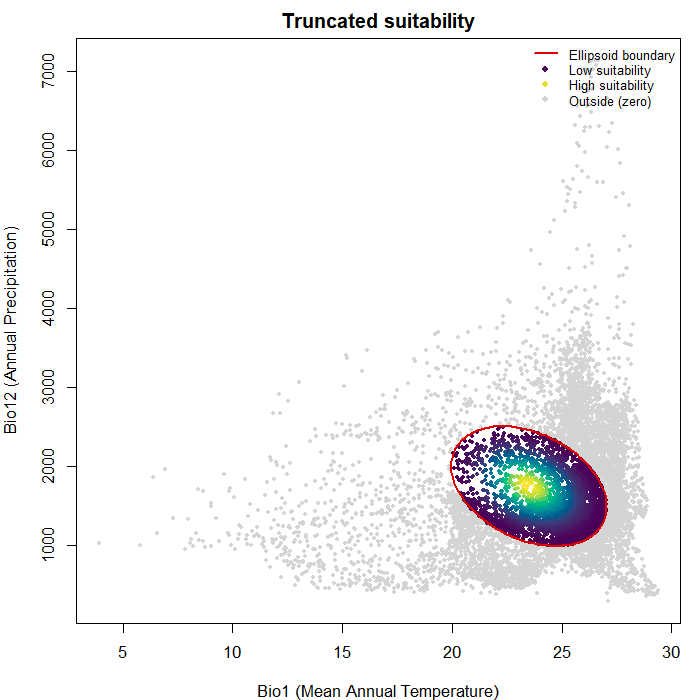
nicheR v0.1.0: Provides tools to construct and define virtual ecological niches using ellipsoid geometries. It enables the identification and extraction of suitable environmental areas, simulation of species occurrence points with various sampling strategies, and visualization of niche boundaries and simulated occurrences in both environmental and geographic space. See Etherington et al. (2009) and Qiao et al. (2015) for background. There are six vignettes, including Visualizing ellipsoids in environmental space and Virtual community simulation.
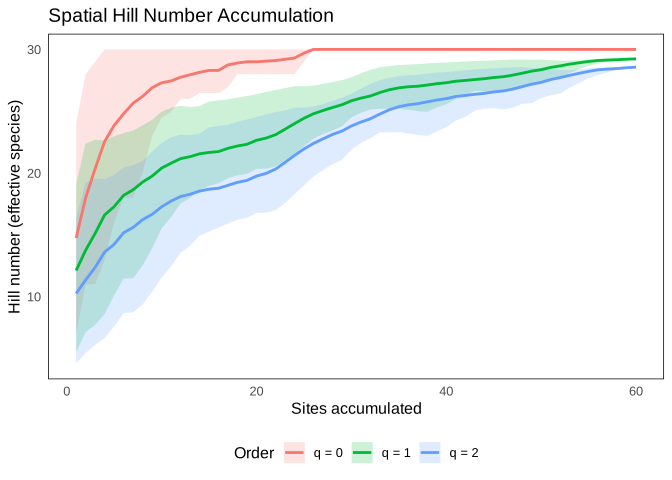
spacc v0.8.3: Implements kNN and kNCN sampling methods with a C++ backend to compute spatial species accumulation curves. Supports Hill numbers, beta diversity partitioning, coverage-based rarefaction and extrapolation, phylogenetic diversity (Faith’s PD, mean pairwise distance, mean nearest taxon distance), functional diversity accumulation, diversity-area relationships, endemism-area curves, sampling-effort correction and fragmentation analysis, and species-area relationship models based on extreme value theory. See Chao et al. (2014) and Baselga (2010) for background. There are seven vignettes, including Getting Started and Diversity Accumulation.
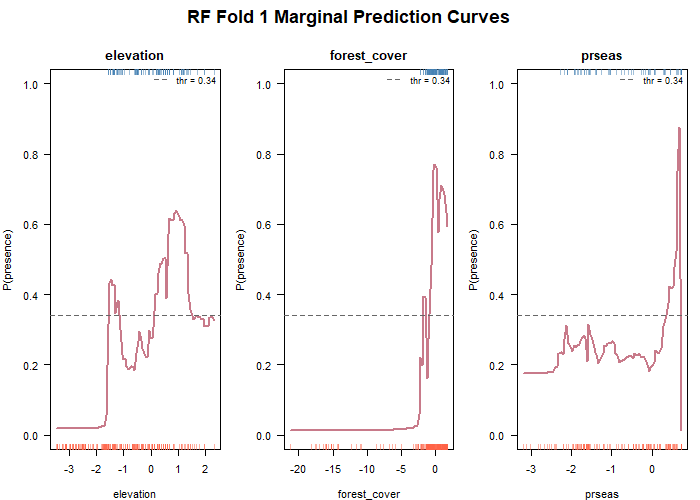
TemporalModelR v0.3.0: Provides functions to assist with three major steps for building temporally-explicit ecological niche and species distribution models: (i) preprocessing species and environmental data, (ii) building a niche model and generating temporally-explicit predictions, and (iii) model postprocessing to explore spatiotemporal trends. See Ingenloff and Peterson (2021 and Blonder (2018) for the methodological and theoretical foundations. Modeling with a GLM and Modeling with a Random Forest.
Epidemiology
SmokingHistoryGenerator v7.0.0: Implements an interface to the Cancer Intervention and Surveillance Modeling Network (CISNET) Smoking History Generator microsimulation engine, which synthesizes individual smoking histories (initiation, cessation, intensity) and ages at death from calibrated initiation, cessation, cigarettes-per-day, and mortality tables. See Jeon et al. (2012) for background and look here to get started.
Finance
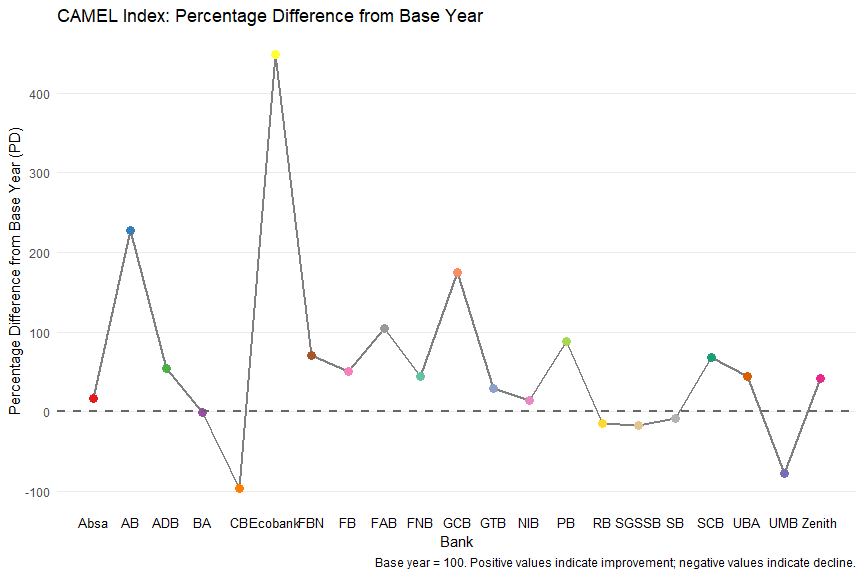
CamelRatiosIndex v1.0.0: Computes a composite year-on-year index for bank performance assessment using the CAMEL framework (Capital Adequacy, Asset Quality, Management Efficiency, Earnings, Liquidity). The multivariate weighting scheme employs factor analysis with robust covariance estimation to derive communality-based weights from the correlation matrix of CAMEL ratios. Provides functions for index computation, visualization, and comparison across banks and time periods. The methodology is described in Ayimah et al. (2023a) and Ayimah et al. (2023b). See the vignette for an introduction.
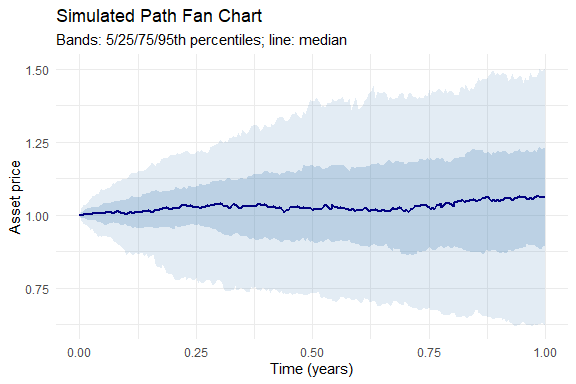
JumpDiffSim v0.1.0: Implements the Merton (1976) and Kou (2002) jump-diffusion models through a unified S4 object-oriented interface. Provides exact compound-Poisson asset price simulation, maximum likelihood parameter estimation with Hessian-based standard errors, Wald-type confidence intervals, European option pricing via the Merton analytic series expansion, and publication-quality diagnostic plots. All functionality operates entirely offline without market data dependencies. See the vignette.
Functional Data Analysis
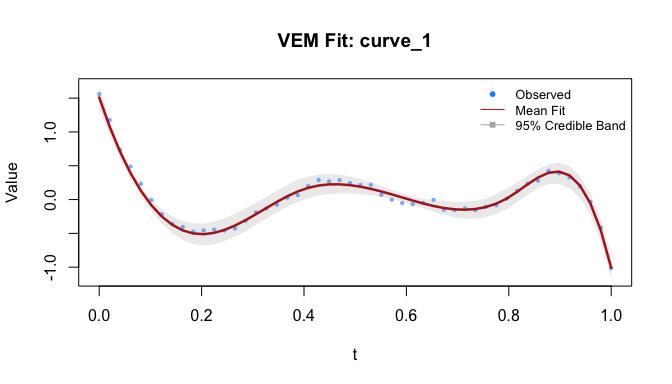
fda.vi v1.0.0: Implements a variational Expectation-Maximization algorithm for smoothing one or multiple functional observations via basis function selection. The algorithm estimates all model parameters simultaneously and automatically, while accounting for within-curve correlation to provide a flexible and computationally efficient framework for smoothing correlated functional data. See da Cruz et al. (2024) for a description of the algorithm and the vignette for examples.
Machine Learning
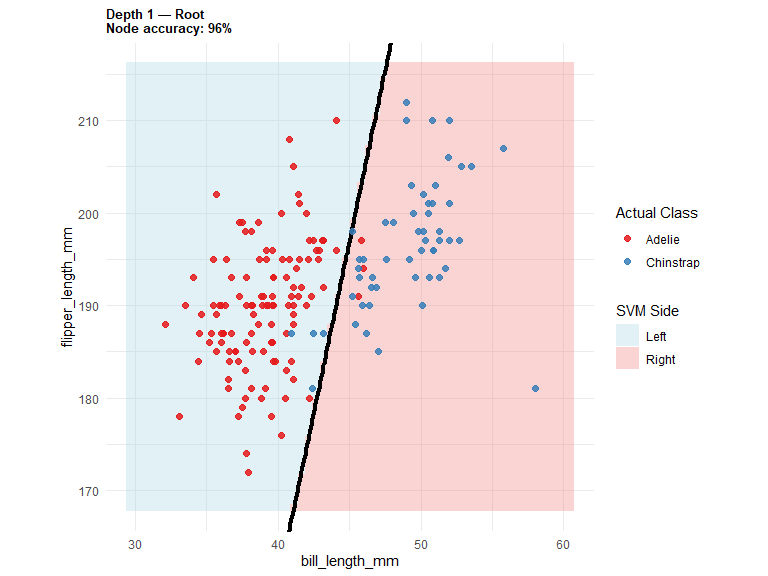
svmodt v0.1.0: Implements Support Vector Machine Oblique Decision Trees. Recursively builds classification trees using linear Support Vector Machine hyperplanes at each node instead of axis-parallel splits, creating oblique decision boundaries. Features include multiple feature selection methods, dynamic feature subset strategies, class weight support for imbalanced datasets, pruning, and feature penalization. See the vignette.
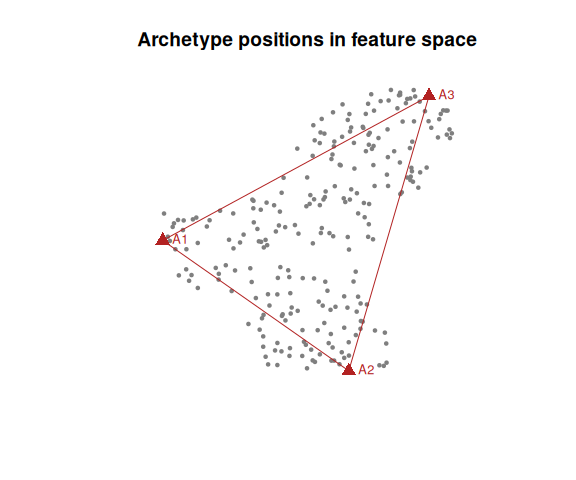
yaap v1.0.0: Fits archetypal analysis models, including Euclidean, probabilistic, kernel, and directional variants. Methods include classical archetypal analysis from Cutler and Breiman (1994), PCHA and kernel variants from Mørup and Hansen (2012), probabilistic archetypal analysis from Seth and Eugster (2016, directional archetypal analysis from Olsen et al. (2022), AA++ initialization from Mair and Sjölund (2023), coreset-style initialization from Mair and Brefeld (2019), and adapted AIC from Suleman (2017). There are four vignettes including an Introduction and Tidymodels Workflows.
Medical Statistics
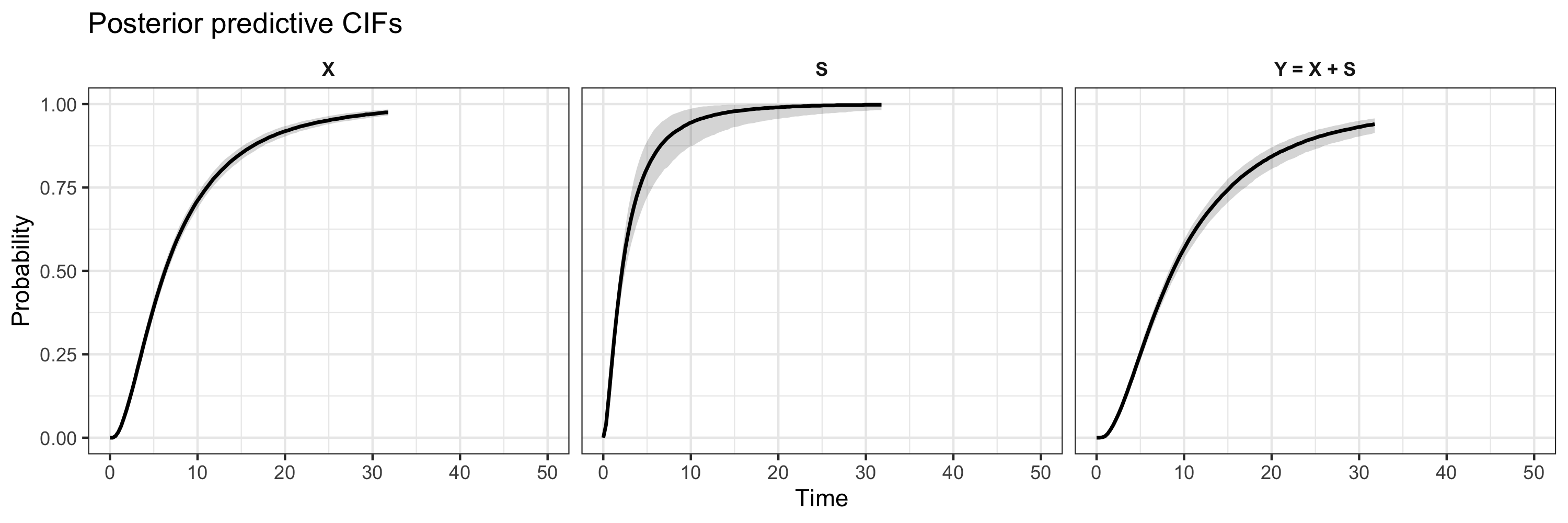
BayesTSM v1.0.1: In screening programs, individuals are usually followed up and tested (screened) for the development of a disease. The target disease often develops progressively in stages; for example, healthy (state 1), pre-state disease (state 2), and the disease state (state 3). When the pre-state disease is found during screening, an intervention may prevent disease progression.BayesTSM functions estimate a progressive three-state model with censoring due to intervention using Bayesian estimation methods, as described in Klausch et al. (2023). See the vignette.
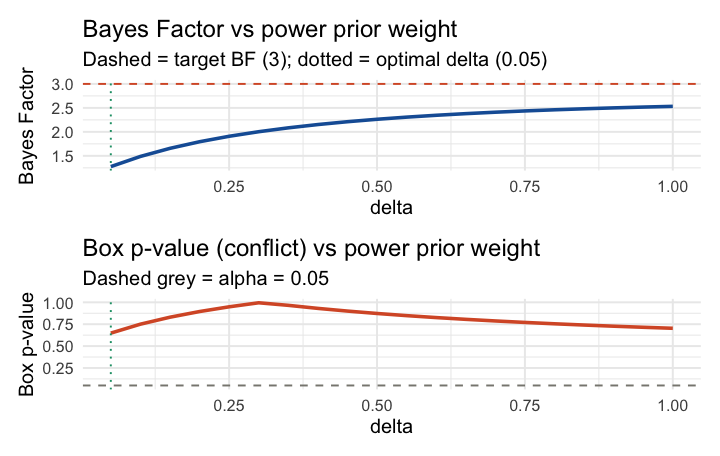
bayprior v0.2.12: Provides a toolkit for constructing, validating, and justifying Bayesian priors in clinical trial settings. Implements expert elicitation via quantile matching, the roulette method, and moment matching, linear and logarithmic expert pooling, and prior-data conflict diagnostics. Includes a fully modular Shiny application for interactive use. See Box (1980) and Oakley and O’Hagan (2010) for background. There are six vignettes, including Introduction and Robust, Sceptical, and Power Priors.
Networks
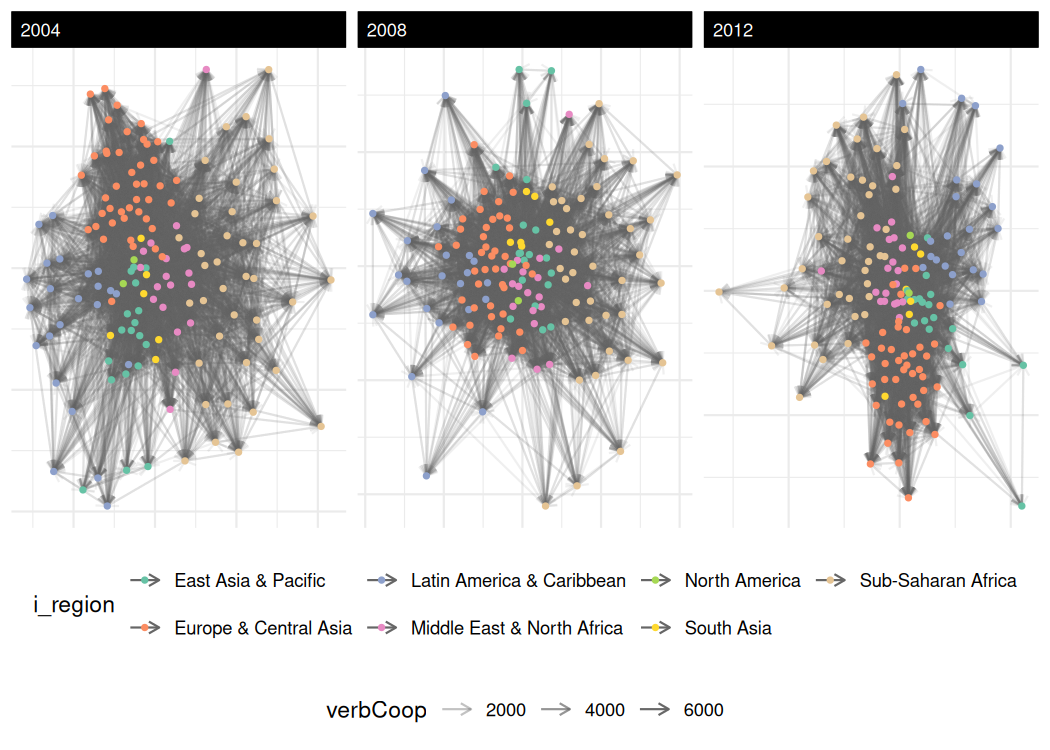
netify v1.5.3: Provides functions to build, validate, analyze, and visualize network data from dyadic, event, matrix, igraph, and network inputs. Supports cross-sectional, longitudinal, bipartite, and multi-layer networks, with conversion helpers for common modeling workflows and plotting utilities for exploratory analysis. Network methods are described in Wasserman and Faust (1994), Cranmer et al. (2021), and Minhas et al. (2022). There are four vignettes, including Quickstart and Internals.
Pharmacokinetics
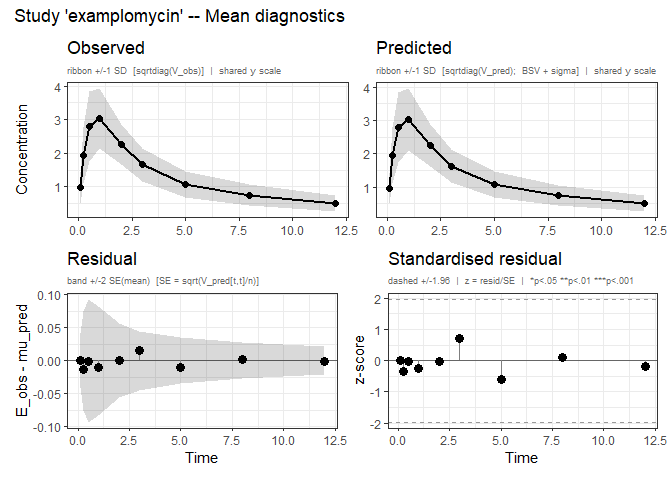
admixr2 v0.2.0: Provides functions to fit pharmacokinetic/pharmacodynamic (PK/PD) models to aggregate-level data (mean vector and covariance matrix per study) rather than individual-level data. Integrates with the nlmixr2/rxode2 ecosystem via four estimation methods: a First-Order analytical estimator, a Monte Carlo estimator, a Gauss-Hermite quadrature estimator, and an Iterative Reweighting Monte Carlo estimator. Methods are based on Välitalo (2021) software described in van de Beek et al. (2025). See the vignette to get started.
Probability
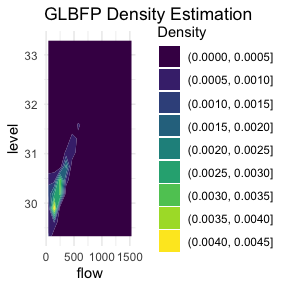
GLBFP v0.5.2: Implements nonparametric density estimation with Averaged Shifted Histogram, Linear Blend Frequency Polygon, and General Linear Blend Frequency Polygon estimators and provides pointwise and grid-based estimation workflows, sparse-prefix grid-count computation, plotting helpers, and plug-in bandwidth selection. Methodological background follows Scott (1992), Terrell and Scott (1985), and Carbon and Duchesne (2024). There are nine vignettes, including Getting started and Package overview.
Programming
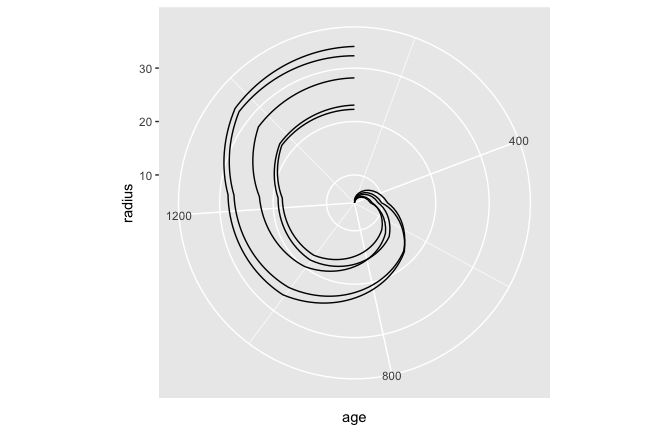
rsgl v0.1.0: Generates plots from a database connection and an SGL statement. SGL is a graphics language designed to look and feel like SQL and is especially useful for those familiar with SQL who want to specify plots in a similar manner. The SGL language is described in Chapman (2025). See the vignettes Get started and Example gallery.
Psychometrics
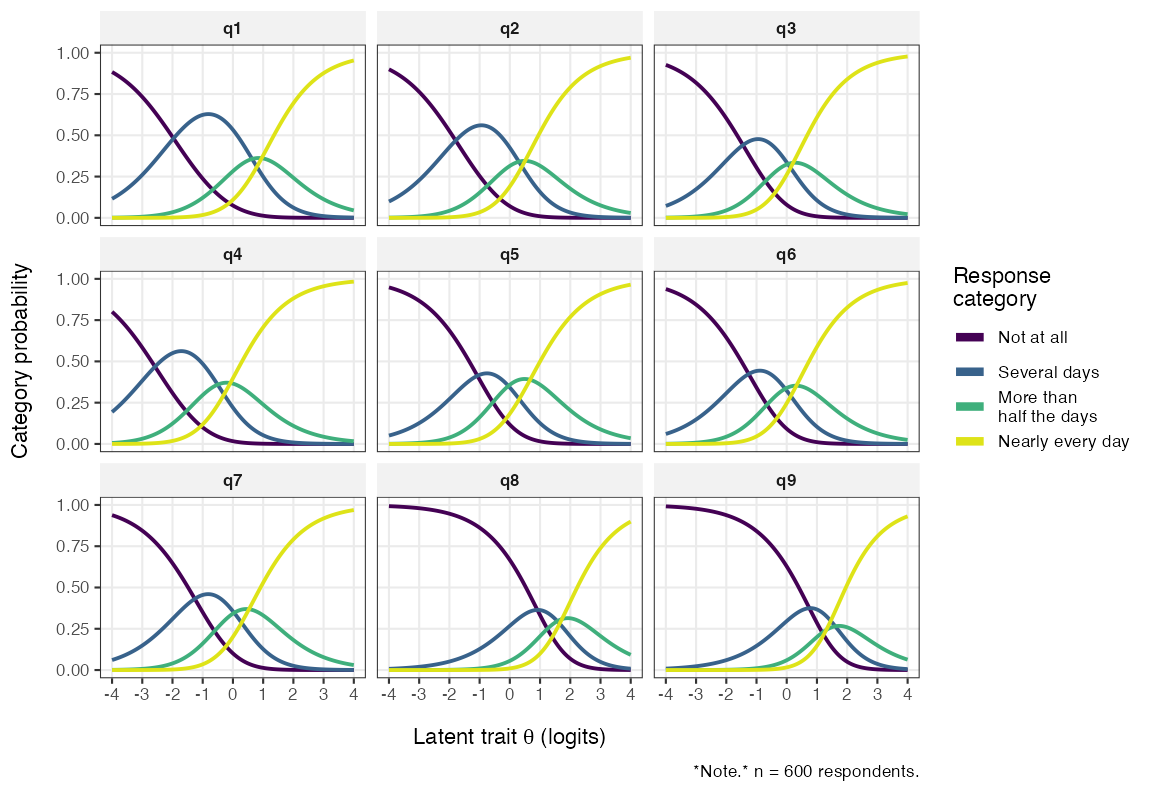
easyRasch2 v1.1.0: Streamlines reproducible Rasch measurement theory analyses for ordinal item-response data, combining estimation routines from eRm, psychotool, mirt, iarm, and lavaan with consistent diagnostic, plotting, and reporting layers. Covers the four basic psychometric criteria summarized by Christensen et al. (2021): unidimensionality, local independence, ordered response category thresholds, and invariance across subgroups, together with item fit, targeting, reliability, category functioning, and descriptive item-response plots. A distinguishing feature is the use of simulation-based critical values to replace rule-of-thumb cutoffs. See the vignette.
Risk Analysis
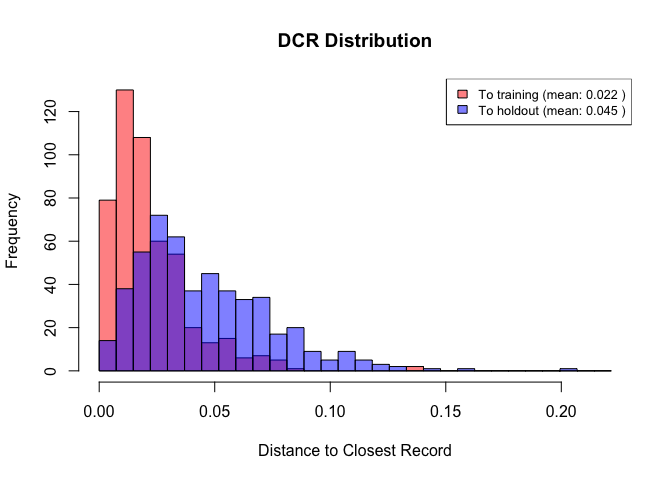
riskutility v0.1.0: Provides comprehensive methods to measure disclosure risk and data utility for anonymized and synthetic data. Implements attribution-based risk metrics including Correct Attribution Probability, Targeted CAP, Within Equivalence Class Attribution Probability, and Risk of Attribute Prediction-Induced Disclosure. Also provides distance-based privacy metrics such as Distance to Closest Record, Nearest Neighbor Distance Ratio, and Identical Match Share. Utility assessment includes propensity score analysis, distribution comparisons, and various statistical tests. Methods are based on Taub et al. (2018). See the vignette.
Statistics
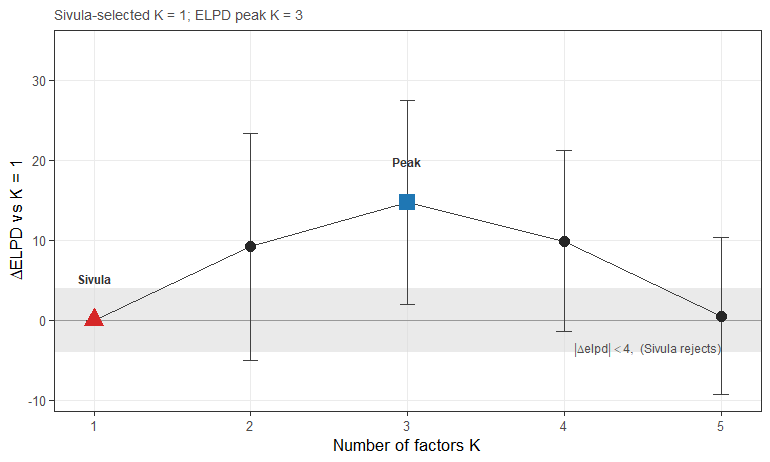
bayesqm v0.1.0: Provides a Bayesian factor-analytic framework for Q methodology. Fits a low-rank factor model to Q-sort data with a Student-t likelihood and a hierarchical normal prior on loadings, samples the posterior with Stan, resolves rotational ambiguity via the MatchAlign post-processing of Poworoznek et al. (2025) and returns posterior summaries including credible intervals for loadings and factor scores, probabilistic dominant-factor membership, distinguishing and consensus statements, and PSIS-LOO-based factor enumeration following Vehtari et al. (2017) with the Sivula et al. (2025) parsimony rule. See the vignette to get started.
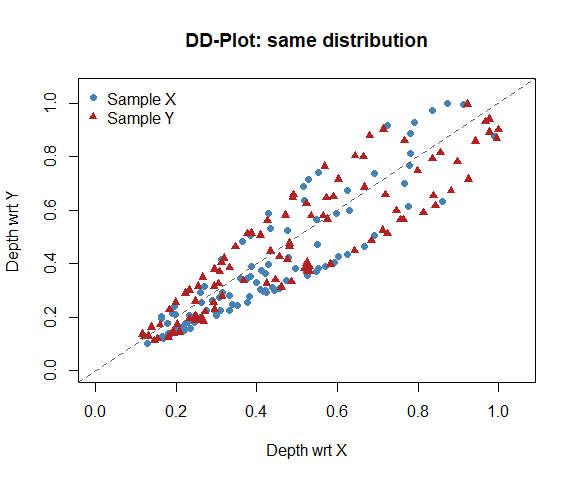
depthR v0.1.8: Provides efficient implementations of multivariate statistical depth functions in arbitrary dimension. Implements Mahalanobis depth, Tukey halfspace depth, Liu simplicial depth, projection depth, spatial depth, depth-based medians, central regions, outlier detection, and depth-depth plots. C++ backends via Rcpp and RcppEigen ensure performance at large n and d. See Liu (1990), Serfling and Zuo (2000), and Vardi and Zhang (2000) for background, and the vignette for an introduction.
dppca v0.1.0: Provides tools for differentially private principal component analysis visualization and includes functions for estimating private principal component directions, constructing private scree and proportion of variance explained summaries, and visualizing two-dimensional PCA score summaries using additive and sparse histogram mechanisms. Group-wise score visualizations and an interactive shiny app are also provided. See Kim and Jung (2025), Dwork and Roth (2014) and Ramsay and Spicker (2025) for background. There are four vignettes, including Algorithms and PC Directions in dppca.
ernest v1.2.5: Bayesian evidence estimation and posterior inference with the nested sampling algorithm, described in Skilling (2006) and Buchner (2023), along with S3 methods for simulating uncertainty and creating visualizations. See the vignettes Nested Sampling and More Examples.
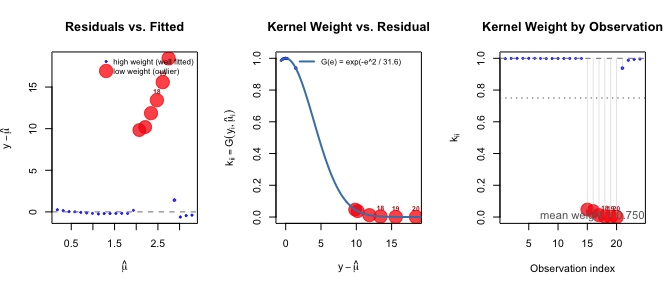
gkrreg v0.4.0: Implements the Gaussian Kernel Robust Regression method proposed by De Carvalho, Lima Neto and Ferreira (2017), which re-weights observations iteratively using the Gaussian kernel so that poorly-fitted observations receive small weights, yielding resistance to Y-space outliers, X-space outliers and leverage points. Provides three estimators for the kernel width hyper-parameter: Caputo, pairwise median, and residual variance. Inference is accomplished via an analytic sandwich variance estimator or via bootstrap. Six real datasets from the robust regression literature are included to facilitate reproducible comparisons. See the vignette.
picreg v0.1.4 Implements the Pivotal Information Criterion developed by Sardy, van Cutsem, and van de Geer. PIC is a general framework to improve on BIC and LASSO for fitting sparse regression linear models in which the regularization parameter 𝜆 is selected automatically from a pivotal statistic. Functions fit the resulting estimators across six response distributions, Gaussian, binomial, Poisson, exponential, Gumbel, and Cox, and three sparsity-inducing penalties; (LASSO), the Smoothly Clipped Absolute Deviation (SCAD), and Minimax Concave Penalty (MCP). See the vignette for an introduction.
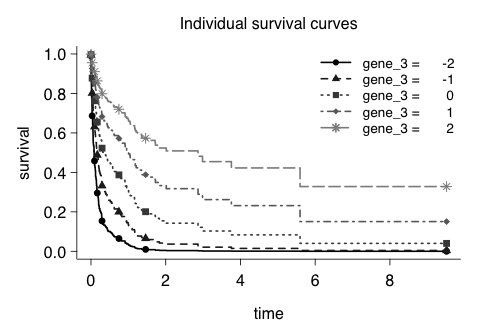
SimplexRegression v0.1.5: Fits and analyzes simplex regression models with either fixed or parametric mean link functions. Implements the simplex probability density function, cumulative distribution function, quantile function, random number generation, and variance evaluation. Offers several fixed and parametric link functions for the mean submodel, tools for residual analysis and diagnostic plotting, hypothesis testing procedures, and influence measures such as Cook’s distance and leverage. Includes the Scout Score criterion for model selection, enabling comprehensive inference and diagnostic analysis within the simplex regression framework. See Barndorff-Nielsen and Jorgensen (1991) and Justino and Cribari-Neto (2026) for more details and the vignette for examples.
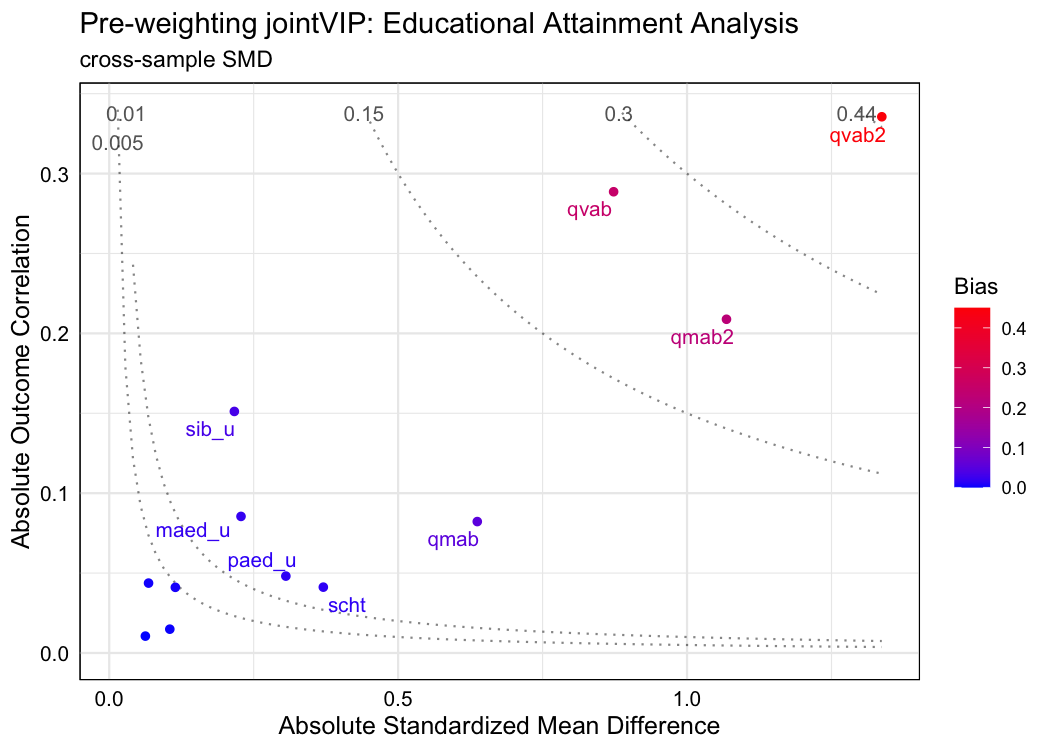
vbm v0.1.0: Provides methods for variance-based sensitivity analysis and weighting estimators in observational studies based on the methodology by Huang & Pimentel (2025) Includes bootstrap inference, bias bounds estimation, and visualization tools for sensitivity parameters. See the vignette.
Time Series
bvars v1.0: Provides fast and efficient procedures for Bayesian estimation and forecasting using state-of-the-art vector autoregressions. Includes the model proposed by Chan (2020), a Bayesian vector autoregression with Minnesota priors and a flexible structure of the error term that permits conditional multivariate normal or Student’s t distributions, as well as homoskedastic or heteroskedastic specifications with a common volatility modelled by centred or non-centred Stochastic Volatility. Additional features include predictive analyses using density forecasting and forecast-error variance decompositions. See README for an example.
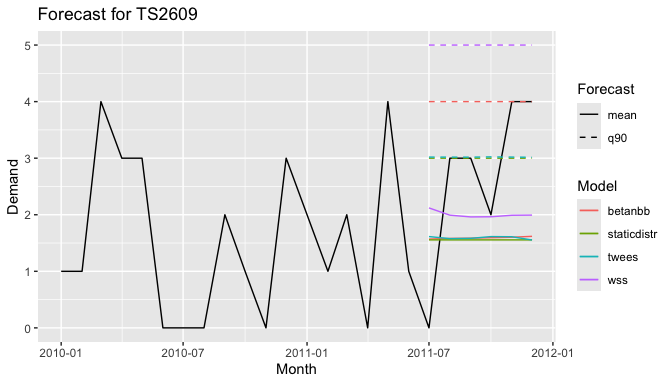
fable.intermittent v0.1.1: Extends the fable framework to support forecasting methods specifically designed for intermittent time series data, where demand occurs sporadically with many zero values. All methods produce probabilistic forecasts returned as ‘distributional’ objects. The returned forecasts can be used to evaluate accuracy, plot and print the results. Methods include: Harvey, Fernandes (1989), Willemain, Smart, Schwarz (2004) and several others. See the vignette.
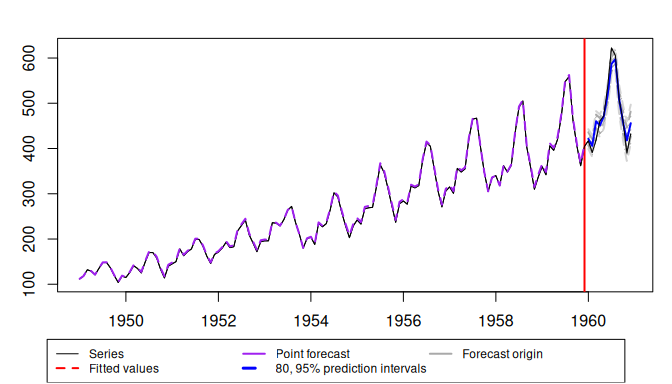
muse v0.1.0: Implements the Power / Trend / Seasonal (PTS) model, a unified state-space framework based on the Multiple Source of Error model. It brings the trend, seasonal and irregular component models of Harvey (1989), Durbin and Koopman (2012) and others together under a single estimation, selection and forecasting interface, with an optional Box-Cox power transformation. Models are estimated by maximum likelihood through the Kalman filter and smoother, with automatic component selection by information criteria. See the vignette.
Utilities
ahocorasick v0.2.0: Provides fast multi-pattern string matching using the ’Aho-Corasick algorithm, powered by the Rust aho-corasick crate. It builds reusable automatons for detecting matches, counting matches, locating characters, extracting matched text, and replacing matches in character vectors. See Aho and Corasick (1975) for more information on the Aho-Corasick algorithm and the vignette for an example.
mx.crypto v0.2.0: Provides Olm and Megolm encryption ratchet primitives for the Matrix messaging protocol, wrapping the vodozemac Rust crate. Provides device-key generation, one-time-key management, 1:1 Olm sessions, and Megolm group sessions. Pairs with the mx.api package, which handles Matrix HTTP transport. See the vignette.
pkgmatch v0.5.4: Provides functions to find R packages from CRAN, rOpenSci, or Bioconductor corpora. Packages can be matched to general text descriptions, to names of installed packages, or to local paths to entire source repositories. The package is used to list the most similar packages for each new submission to the rOpenSci software peer-review program. There are three vignettes, including an introduction and Example applications.